Who Knows What You're Taking? The Hidden Data Trail Behind Your Online Prescription Records
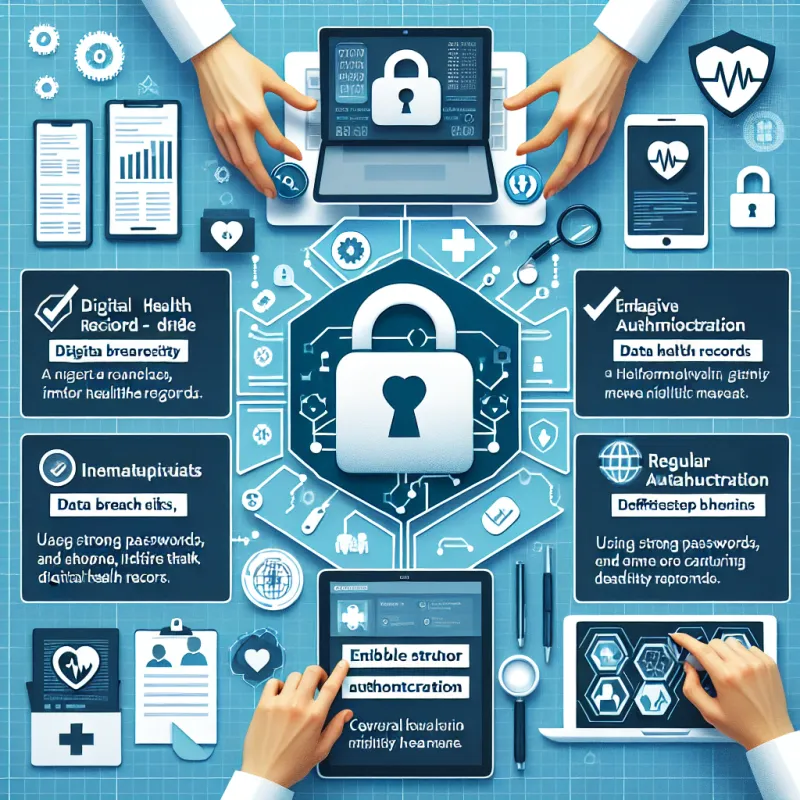
Photo: digital privacy data security medical records online pharmacy concept, via usefulnexus.com
When you order a prescription refill at two in the morning from the comfort of your couch, the convenience feels almost miraculous. No waiting rooms, no rushed conversations at a pharmacy counter, no rearranging your schedule. What rarely crosses most people's minds in that moment, however, is a quieter question: once that transaction is complete, where does the record of it go?
The answer is more complicated — and, for many consumers, more surprising — than most people anticipate.
The Digital Footprint of a Single Prescription
Every prescription filled through an online pharmacy generates a cascade of data. Your name, address, date of birth, prescribing physician, medication name, dosage, refill frequency, and diagnosis codes can all be captured and stored within interconnected systems. Unlike a paper receipt tucked into a bag, this information lives in databases that may be accessed by a wide range of entities — some expected, some less so.
At minimum, your prescription record is typically visible to: the pharmacy itself, your health insurance provider or pharmacy benefits manager (PBM), the prescribing physician's practice, and any clearinghouses used to process the transaction. That list alone covers a significant number of organizations — and it does not yet account for secondary uses of that data.
HIPAA: A Strong Foundation, But Not an Absolute Shield
Most Americans have heard of HIPAA — the Health Insurance Portability and Accountability Act — but far fewer understand precisely what it does and does not protect. HIPAA establishes federal baseline standards for how "covered entities" (including pharmacies, insurers, and healthcare providers) handle protected health information (PHI). It requires that your data be kept secure, that you receive notice of how it is used, and that it not be disclosed without your authorization for purposes beyond treatment, payment, and healthcare operations.
Those three permitted purposes — treatment, payment, and operations — are broader than they may initially sound. A pharmacy sharing your refill history with your insurer to process a claim falls squarely within HIPAA's permitted disclosures. So does sharing de-identified aggregate data for quality improvement purposes.
The more complex territory involves data that has been "de-identified" — stripped of direct personal identifiers like your name or Social Security number. Under HIPAA, properly de-identified data is no longer considered PHI and is therefore not subject to the same protections. Critics argue, however, that modern data analytics techniques can often re-identify individuals from supposedly anonymous datasets, particularly when prescription records are combined with other commercially available data.
The Pharmacy Benefit Manager Problem
One of the least-discussed actors in the US prescription data ecosystem is the pharmacy benefit manager, or PBM. PBMs serve as intermediaries between insurers, pharmacies, and pharmaceutical manufacturers. They process the vast majority of prescription drug claims in the country and, in doing so, accumulate extraordinarily detailed longitudinal records of what Americans take and when.
Several of the largest PBMs have faced scrutiny over the years regarding data-sharing practices with affiliated entities, including insurers and pharmaceutical companies. While these practices generally occur within HIPAA's permitted boundaries, they raise legitimate questions about the extent to which your medication history influences downstream decisions — including, in some cases, insurance pricing or coverage determinations.
Data Brokers: The Wildcard in the System
Perhaps the least visible — and most concerning — element of prescription data privacy involves the commercial data broker industry. Some pharmacy data, particularly when aggregated and de-identified, has historically been sold to data brokers who then package and resell it for purposes ranging from pharmaceutical marketing to actuarial analysis.
A landmark US Supreme Court case, Sorrell v. IMS Health (2011), addressed the sale of prescription data and ultimately ruled in favor of data companies' rights to traffic in such information under the First Amendment. While subsequent state-level legislation has added some guardrails — Vermont and California, among others, have enacted stronger consumer data protections — the federal landscape remains fragmented.
Your Rights as a Consumer
Despite these complexities, US consumers retain meaningful rights over their prescription data. Under HIPAA, you are entitled to:
- Request a copy of your own health records, including prescription histories maintained by your pharmacy.
- Request an accounting of disclosures, meaning a log of who has accessed your PHI and for what purpose.
- Request restrictions on certain disclosures, such as asking that information not be shared with your health plan for services you pay for entirely out of pocket.
- File a complaint with the US Department of Health and Human Services' Office for Civil Rights if you believe your privacy rights have been violated.
Beyond federal rights, residents of states with comprehensive consumer privacy laws — including California, Colorado, and Virginia — may have additional avenues for requesting data deletion or opting out of certain data sales.
Practical Steps to Protect Your Medication Privacy
Awareness is the first line of defense. The following measures can meaningfully reduce your exposure without sacrificing the convenience of digital pharmacy services:
Read the privacy notice carefully. Every HIPAA-covered pharmacy is required to provide one. Look specifically for language about data sharing with affiliates, marketing partners, or third-party service providers.
Ask about opt-out options. Many pharmacies offer the ability to opt out of having your data used for marketing purposes. This is often buried in account settings or requires a direct request.
Pay out of pocket for sensitive medications. Prescriptions paid for without insurance involvement generate a smaller data trail. This is particularly relevant for medications related to mental health, reproductive health, or substance use treatment — categories that carry heightened sensitivity.
Use a reputable, US-licensed online pharmacy. Legitimate pharmacies operating within the United States are required to comply with HIPAA and relevant state laws. Avoid offshore or unverified platforms that may not adhere to any comparable standards.
Review your pharmacy's data retention policies. Some pharmacies retain prescription records indefinitely; others have defined retention windows. Knowing this helps you understand the longevity of your data exposure.
A Note on Choosing Your Digital Pharmacy Wisely
At MedShop24, we believe that convenience and privacy are not mutually exclusive. Accessing your medications around the clock should not require surrendering meaningful control over your health information. As you evaluate any digital pharmacy platform, look for transparent privacy practices, clear opt-out mechanisms, and a demonstrated commitment to regulatory compliance.
The 24/7 accessibility that modern online pharmacies offer is a genuine advancement in healthcare convenience. Ensuring that advancement does not come at the cost of your personal privacy requires nothing more — and nothing less — than asking the right questions before you click "submit."