Stockpiling Pills: The Hidden Costs and Dangers Hiding in Your Medicine Cabinet
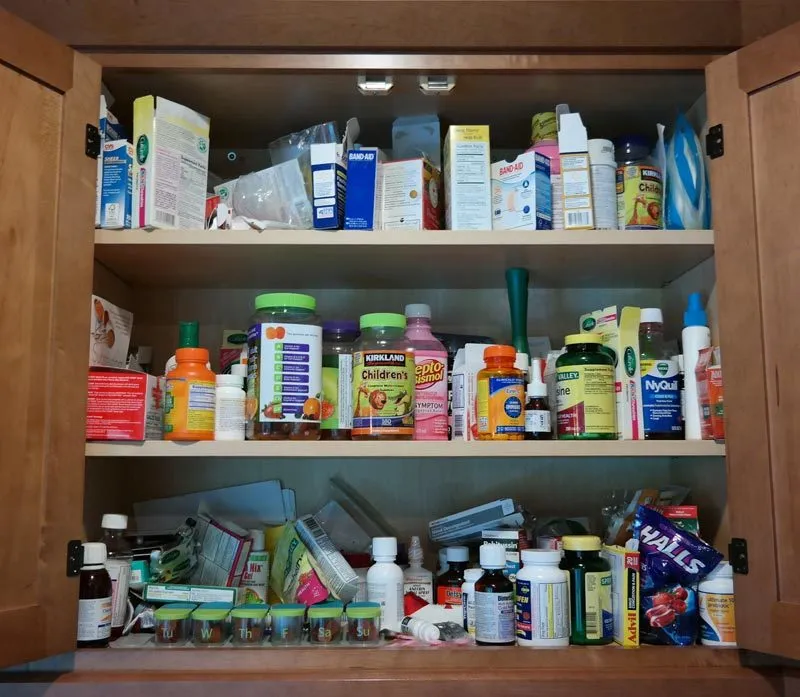
Photo: cluttered medicine cabinet expired prescription bottles pills, via akronohiomoms.s3-accelerate.amazonaws.com
Open the medicine cabinet in the average American home and you are likely to find a graveyard of half-used prescriptions, expired over-the-counter remedies, and duplicate bottles of the same medication purchased in a moment of uncertainty. It is a common, largely invisible habit—and it is costing households hundreds of dollars a year while quietly endangering the people those medications were meant to protect.
The phenomenon of medication accumulation is more widespread than most people realize. According to data from the U.S. Food and Drug Administration, Americans collectively dispose of millions of pounds of unused medications each year, yet the volume sitting in homes at any given time dwarfs what is ever surrendered to take-back programs. Understanding why this happens—and what it truly costs—is essential for any household that takes its health and finances seriously.
Why Americans Accumulate Medications in the First Place
The psychology behind medication hoarding is not rooted in recklessness. In most cases, it stems from entirely understandable impulses: the fear of running out during an illness, the reluctance to waste something that cost money, or the vague sense that a medication "might come in handy" someday. Patients who receive a 30-day supply but recover in ten days rarely think twice about keeping the remainder. Prescriptions that were switched mid-course leave behind near-full bottles. Bulk purchasing, driven by the desire to save money per unit, creates surpluses that outlast their usefulness.
Pharmacists who work with patients on a regular basis consistently identify over-purchasing as one of the most common and least-discussed contributors to medication waste. The logic of buying more to spend less per dose collapses entirely when those doses expire unused on a shelf.
The Financial Reality: What Accumulation Actually Costs
Consider a household that routinely maintains a stockpile of cold and flu remedies, allergy medications, antacids, and leftover prescription drugs. If even a fraction of those products expire before use, the financial loss adds up quickly. Research from the American Pharmacists Association has highlighted that medication non-adherence and waste cost the U.S. healthcare system hundreds of billions of dollars annually—a figure that filters down, in meaningful ways, to individual household budgets.
Expired medications are not simply a sunk cost. They frequently prompt replacement purchases when a new illness strikes and the patient discovers that everything on hand is past its use-by date. This cycle—accumulate, expire, repurchase—is one of the most reliably wasteful patterns in household health spending. The solution is not to stop keeping medications at home, but to keep the right medications in the right quantities, refreshed on a schedule that prevents both shortage and surplus.
The Public Health Risks No One Talks About
Beyond financial waste, household medication accumulation creates a set of risks that are far more serious than an empty wallet.
Accidental Poisonings: The Centers for Disease Control and Prevention consistently ranks accidental medication ingestion as one of the leading causes of poisoning-related emergency room visits, particularly among children under five. Every bottle that lingers in a cabinet beyond its intended use represents an exposure risk, especially in homes with young children or curious pets.
Antibiotic Resistance: Leftover antibiotics are a particular concern. When patients self-prescribe a stored antibiotic for a new illness—or take only a partial course because they ran out—they contribute directly to the development of antibiotic-resistant bacteria. The World Health Organization identifies antimicrobial resistance as one of the greatest threats to global public health, and household antibiotic stockpiles are a documented contributing factor.
Reduced Medication Efficacy: Many medications, including certain eye drops, liquid antibiotics, and insulin preparations, degrade meaningfully after their expiration dates. A patient who relies on an expired product during an acute health episode may receive less therapeutic benefit than expected, potentially prolonging illness or masking a condition that requires professional evaluation.
Diversion and Misuse: Unused prescription medications—particularly controlled substances such as opioids—are a primary source of drug diversion. Studies published in the journal Substance Abuse have found that a significant proportion of people who misuse prescription drugs obtain them from household medicine cabinets, often belonging to family members.
What Proper Disposal Actually Looks Like
The U.S. Drug Enforcement Administration operates a National Prescription Drug Take Back Day twice annually, providing free, anonymous disposal of unused medications at thousands of locations across the country. Year-round drop-off sites, including many retail pharmacies, are also available through the DEA's online locator tool. For medications that cannot be taken to a collection site, the FDA recommends mixing them with an undesirable substance such as coffee grounds or dirt, sealing them in a container, and placing them in household trash—never flushing them, with a narrow list of exceptions for certain high-risk drugs.
Despite the availability of these resources, participation in take-back programs remains low. Awareness is part of the problem, but so is convenience. When disposal requires a special trip, many people simply delay indefinitely.
A Smarter Approach: Managed Replenishment Over Stockpiling
The most effective antidote to medication accumulation is not periodic purging—it is a more disciplined approach to acquisition in the first place. Rather than purchasing large quantities speculatively, health-conscious households benefit from maintaining a streamlined inventory of genuinely necessary items, replenished on a predictable schedule aligned with actual use.
This is precisely where a 24/7 pharmacy resource becomes genuinely valuable. When patients know they can access medications and health supplies at any hour—including nights, weekends, and holidays—the anxiety-driven impulse to stockpile loses much of its power. There is no need to over-purchase "just in case" when reliable access is always available. MedShop24's round-the-clock availability and convenient delivery options are designed with exactly this dynamic in mind: providing the reassurance of consistent access without encouraging the surplus accumulation that ultimately costs households more.
A thoughtful refill schedule, calibrated to actual consumption rather than worst-case scenarios, keeps medicine cabinets current, safe, and financially efficient. It is a small shift in habit with measurable consequences for both household budgets and family safety.
The Bottom Line
Medication hoarding is not a character flaw—it is a rational response to a healthcare environment that often feels unpredictable and inaccessible. But the costs it imposes, financial and otherwise, are real and largely avoidable. By understanding why accumulation happens, recognizing its risks, and adopting a more intentional approach to purchasing and disposal, American households can transform one of their most overlooked health habits into a genuine asset.
Your medicine cabinet should be a tool for wellness—not a warehouse for waste.