Exhausted and at the Counter: How Late-Night Pharmacy Visits Quietly Set the Stage for Medication Errors
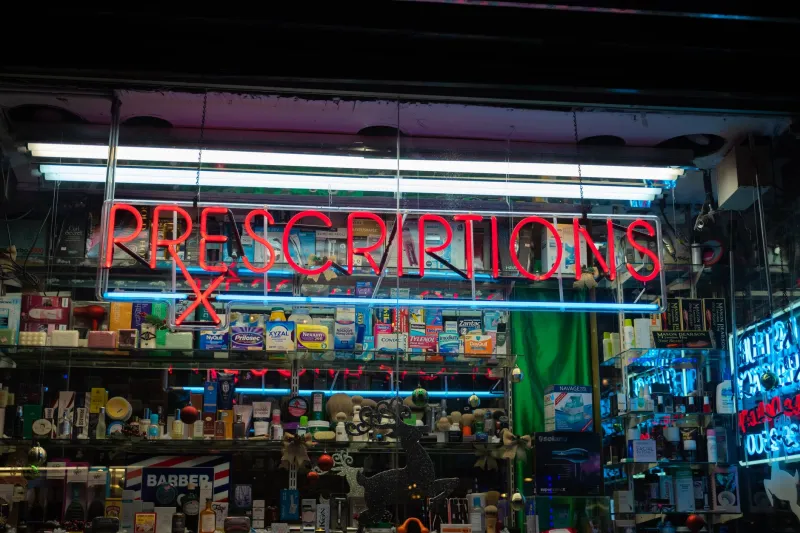
There is a particular kind of desperation that arrives at 2 or 3 in the morning — a child's fever spiking, a sudden allergic reaction, a chronic condition flaring without warning. For millions of Americans, the instinct is immediate: get to a pharmacy, get the medication, get relief. What rarely enters the calculation is how profoundly the hour itself shapes the safety of that transaction.
Sleep deprivation does not simply make you tired. It systematically dismantles the cognitive architecture required to interact safely with medications — and that risk falls on both the patient picking up the prescription and, in some cases, the understaffed pharmacist filling it.
What Sleep Loss Does to Your Brain at the Pharmacy Counter
The prefrontal cortex, the region of the brain responsible for decision-making, attention to detail, and working memory, is among the first casualties of sleep deprivation. Research published in journals tracking occupational cognitive performance consistently finds that individuals operating on fewer than six hours of sleep make significantly more errors on tasks requiring sustained attention — precisely the kind of attention that reading a prescription label demands.
Consider what a patient must do correctly at a late-night pharmacy counter: confirm the medication name matches what was prescribed, verify the dosage against what the physician ordered, check the directions for any conditional language ("take with food," "avoid alcohol," "do not crush"), and mentally cross-reference the new prescription against anything else currently being taken at home. Under normal daytime conditions, many people rush through this process. After midnight, with impaired working memory and slowed processing speed, the likelihood of missing a critical detail climbs sharply.
Particular danger lies in what cognitive scientists call "confirmation bias under fatigue" — the brain's tendency, when exhausted, to see what it expects to see rather than what is actually there. A patient expecting to pick up ibuprofen 400 mg may not register that the label reads 800 mg. Someone anticipating a familiar orange bottle may not notice that a generic substitution has altered both the appearance and the instructions.
The Pharmacist Factor: Off-Peak Hours and Reduced Oversight
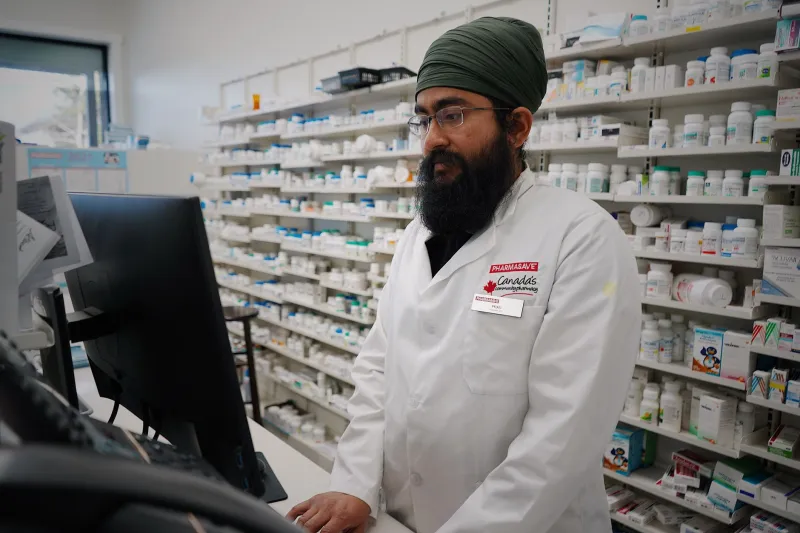
Late-night pharmacy operations are not equivalent to daytime ones in terms of staffing or verification layers. Many overnight shifts run with a single licensed pharmacist and minimal support staff, meaning the multi-step verification protocols that exist during peak hours — double-checking by a pharmacy technician, secondary review before dispensing — may be compressed or bypassed entirely under volume pressure or fatigue.
Pharmacists are not immune to the effects of circadian disruption. Studies examining medical error rates across healthcare settings consistently find elevated mistake frequencies during overnight shifts, particularly in the hours between 2 AM and 5 AM, when the body's natural alertness rhythm reaches its lowest point. A 2019 analysis examining dispensing errors at hospital pharmacies found that error rates during overnight shifts were measurably higher than during morning and afternoon hours, even after controlling for prescription volume.
This is not an indictment of overnight pharmacy professionals — it is a physiological reality that the healthcare system has been slow to fully address. Knowing this reality exists is the first step toward protecting yourself within it.
Drug Interaction Oversights: The Invisible Risk
Among the most consequential errors that occur during late-night pharmacy visits are drug interaction oversights. A patient arriving at midnight with a new antibiotic prescription may not think to mention — or may simply forget in their exhausted state — that they are currently taking a blood thinner, a seizure medication, or even a common herbal supplement. Pharmacists rely heavily on patient-reported information to catch interactions that automated systems may not flag if the prescription history is incomplete.
The problem compounds when patients use multiple pharmacies — a common pattern when the primary pharmacy is closed overnight and a 24/7 location is the only option. Without access to a complete medication history, even a fully alert, maximally attentive pharmacist is working with incomplete data.
Certain drug combinations carry interaction risks severe enough to produce hospitalization: fluoroquinolone antibiotics with certain antacids that reduce absorption, sedating antihistamines combined with muscle relaxants, and over-the-counter pain relievers taken alongside prescription NSAIDs. These are not obscure pharmaceutical edge cases — they are interactions that occur with medications millions of Americans take regularly.
Practical Strategies for Safer Late-Night Pharmacy Interactions
The risks outlined above are real, but they are also largely manageable with deliberate preparation. The following strategies are worth building into your household health routine before an emergency arises.
Maintain a current medication list. Keep a written or digitally stored list of every medication, supplement, and over-the-counter product you take regularly, including dosages and frequency. Carry a copy in your wallet or store it in an accessible app. This single step addresses the most common source of interaction errors at overnight pharmacy visits.
Use a single pharmacy with a complete prescription history. When your primary pharmacy offers 24/7 access — whether through a physical location or a verified online service with overnight delivery options — consolidating your prescriptions there ensures that the pharmacist filling your late-night prescription can see your full medication profile. MedShop24, for instance, maintains complete patient records accessible at any hour, giving pharmacists the context they need to flag potential conflicts regardless of when you need care.
Ask the pharmacist to read back the key details. Before leaving the counter, request verbal confirmation of the medication name, dosage, and dosing frequency. This creates an auditory checkpoint that often catches discrepancies your fatigued eyes may have missed on the label.
Photograph your prescription before handing it over. A quick phone photo of the original written prescription gives you a reference point to compare against what you receive. If the dispensed medication does not match, you have documentation.
Delay non-urgent fills until morning when possible. Not every 3 AM pharmacy run is a true emergency. If the medication is for a condition that can safely wait six to eight hours, consider deferring the pickup until you are rested and the pharmacy is better staffed. The safety margin that comes with a fully alert transaction is worth the delay.
Building a Safer Relationship With Overnight Pharmacy Access
The 24/7 pharmacy exists to serve genuine need, and that need is real — emergencies do not schedule themselves around business hours. The goal is not to discourage late-night access but to approach it with the same informed caution you would bring to any high-stakes task performed under conditions of impairment.
Understanding that both you and the pharmacy staff are operating under physiological constraints after midnight is not pessimism — it is the foundation of a safer interaction. Preparation, verification, and consolidated care records are the tools that close the gap between the vulnerability of the late-night moment and the accuracy your health requires.
At MedShop24, 24/7 availability is designed with these realities in mind. Complete medication histories, pharmacist review protocols, and accessible delivery options exist precisely because the hours when people need medications most urgently are often the hours when the conditions for error are most pronounced. Knowing that support structure is in place — and knowing how to use it effectively — transforms a potentially risky late-night transaction into a genuinely safe one.