When Your Blood Pressure Monitor Lies: The Hidden Accuracy Crisis in Home Cardiac Monitoring
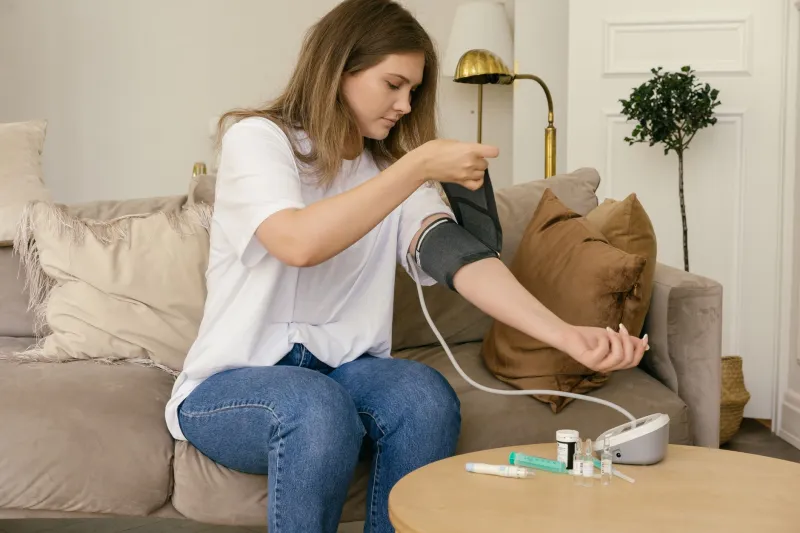
Every morning, across tens of millions of American households, a familiar ritual unfolds: a cuff wraps around an arm, a button is pressed, and a pair of numbers appears on a small screen. Those numbers — systolic over diastolic — then travel directly into a physician's inbox, a medication log, or a patient's growing anxiety. The assumption embedded in that ritual is that the numbers are correct. Increasingly, that assumption is being questioned by cardiologists, biomedical engineers, and patient advocates who have spent years examining what actually comes out of pharmacy-brand blood pressure monitors.
The stakes are not academic. Hypertension affects approximately 119 million adults in the United States, according to the American Heart Association. A significant portion of those individuals manage their condition at home, submitting self-reported readings that physicians use to calibrate prescriptions. When the device producing those readings is inaccurate, the downstream consequences — dose escalations for patients who don't need them, dose reductions for patients who do — can be genuinely dangerous.
The Validation Gap Nobody Talks About
Not all blood pressure monitors sold in the United States undergo the same scrutiny before reaching pharmacy shelves. The FDA classifies home blood pressure monitors as Class II medical devices, which means manufacturers must demonstrate general safety and effectiveness — but the pathway to market does not always require the kind of rigorous independent clinical validation that cardiologists consider the gold standard.
The most widely accepted international validation protocols — developed by organizations including the European Society of Hypertension and the British and Irish Hypertension Society — require devices to be tested against mercury sphygmomanometers in controlled populations, with strict accuracy thresholds. A searchable database maintained by validateBP.org lists devices that have passed these protocols. Many pharmacy-brand monitors do not appear on that list.
Dr. Raymond Holt, a cardiologist practicing in suburban Chicago, describes encountering the discrepancy regularly. "I'll have a patient come in convinced their pressure is well-controlled because their home device reads 118 over 74 every morning," he explains. "We take a manual reading in the office and it's 148 over 92. That's not white-coat syndrome — that's a device problem. And in the meantime, we've been leaving a genuinely hypertensive patient under-treated."
The reverse scenario is equally troubling. Devices that read artificially high can prompt unnecessary prescription increases, exposing patients to side effects — dizziness, fatigue, kidney stress — that their actual blood pressure level never warranted.
What Drives the Disparity
Several technical factors contribute to inaccurate readings in consumer-grade monitors. Cuff sizing is among the most consequential and least discussed. A cuff that is too small for a patient's arm circumference will consistently produce elevated readings; a cuff that is too large will underestimate pressure. Many pharmacy-brand devices ship with a single "universal" cuff that fits a narrower range of arm sizes than the packaging implies.
Algorithm quality is another variable. Modern oscillometric monitors — the type that senses arterial wall vibrations rather than sounds — rely on proprietary algorithms to translate oscillation data into pressure values. The sophistication and validation of those algorithms varies considerably between manufacturers, and that variation is not visible to the consumer standing in a pharmacy aisle comparing box designs.
Battery voltage fluctuation, sensor drift over time, and the absence of automatic averaging across multiple readings are additional sources of error that clinical-grade devices are specifically engineered to minimize.
Real Patients, Real Consequences
Martha Delaney, a 63-year-old retired schoolteacher from rural Tennessee, spent fourteen months convinced her hypertension was worsening. Her pharmacy-brand wrist monitor — she had chosen it because it was easier to use than an arm cuff — consistently showed readings in the 155 to 165 systolic range. Her physician, working from those numbers, added a second antihypertensive agent to her regimen. She developed persistent lightheadedness and had two near-fainting episodes before a visiting nurse happened to bring a validated arm-cuff monitor to a routine home visit.
"The validated device showed 128 over 78," Delaney recalls. "My doctor was shocked. We tapered me off the second medication over six weeks and the dizziness disappeared. I had been over-medicated for over a year based on a device I bought at a discount pharmacy for thirty-two dollars."
Wrist monitors, it is worth noting, are particularly prone to positional error. Cardiologists generally recommend upper-arm cuff devices for home monitoring, a recommendation that many patients never receive at the point of purchase.
How to Identify a Monitor Worth Trusting
For consumers navigating the pharmacy aisle — or shopping online at any hour through a service like MedShop24 — several practical criteria can meaningfully reduce the risk of purchasing an inaccurate device.
Check the validation database first. Before committing to any device, visit validateBP.org and confirm the specific model appears on the validated list. This single step filters out a substantial proportion of unreliable consumer monitors.
Prioritize upper-arm cuff designs. Unless a physician has specifically recommended a wrist device for anatomical reasons, an upper-arm monitor will generally deliver more consistent results.
Verify cuff size compatibility. Measure your arm circumference at the midpoint between shoulder and elbow, then confirm the device's stated cuff range accommodates your measurement. Most validated monitors offer multiple cuff sizes; a reputable retailer will list those specifications clearly in the product description.
Look for averaging functionality. Devices that automatically take two or three consecutive readings and report the average reduce the impact of momentary physiological fluctuations and positional artifacts.
Ask your pharmacist — specifically. Not all pharmacy staff are trained to distinguish validated from unvalidated monitors, but a knowledgeable pharmacist can be an invaluable resource. When shopping through an online pharmacy platform, look for product listings that explicitly reference clinical validation studies or include a validation database confirmation.
Cross-calibrate with your physician's office. Bring your home monitor to your next appointment and compare its reading against the office measurement taken simultaneously. A discrepancy of more than 5 mmHg warrants concern and possibly a device replacement.
The Role of Your Pharmacy in Getting This Right
The responsibility for accurate home monitoring does not rest with patients alone. Pharmacies — whether brick-and-mortar or digital — carry an obligation to stock and recommend devices that meet clinical standards, not simply devices that carry attractive price points or prominent shelf placement.
At MedShop24, product curation in the cardiac monitoring category is guided by clinical validation status. Devices that have not undergone independent accuracy testing are not positioned as equivalent alternatives to validated models, because they are not equivalent. When a patient is managing hypertension, the cost difference between a $35 unvalidated monitor and a $75 validated device is trivial measured against the cost — financial and physical — of a year of inappropriate medication.
Convenient access to health products matters. But convenience without accuracy is not healthcare — it is the illusion of healthcare. For the millions of Americans whose morning ritual depends on a small screen displaying two numbers, understanding the difference between those two categories of device may be the most important step they take toward genuinely managing their cardiovascular health.