Decoded: Everything Printed on Your Prescription Bottle and Why Every Word Matters
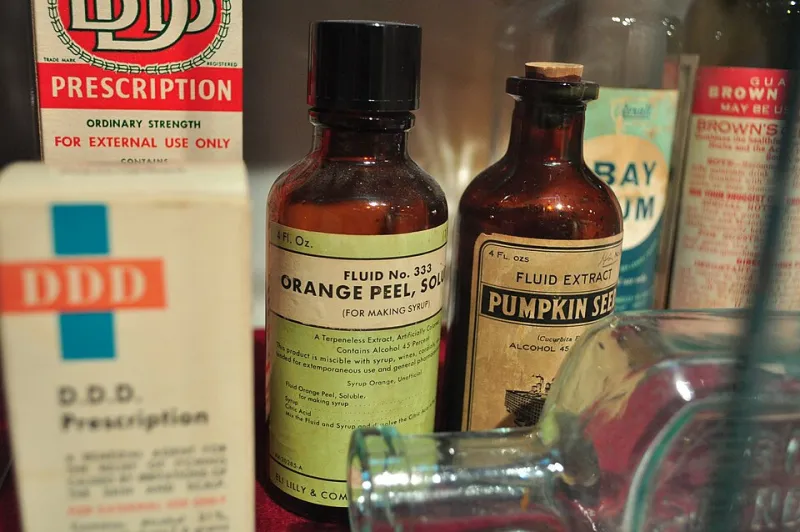
Photo: Joe Mabel, CC BY-SA 3.0, via Wikimedia Commons
Pickup a prescription bottle from your medicine cabinet right now and take a close look. Chances are it carries your name, a medication name you may or may not be able to pronounce, a series of abbreviated instructions, and at least one brightly colored adhesive sticker warning you about something. Most people absorb perhaps a third of that information before setting the bottle down.
That gap between what is printed and what is understood is not a minor inconvenience. It is a genuine patient safety issue. Misread dosing instructions, overlooked drug interaction warnings, and confusion about refill timing collectively contribute to thousands of preventable medication errors in the United States every year. The good news: every element of a prescription label follows a largely standardized format, and once you know the key, it becomes far more readable.
Here is a complete breakdown.
1. The Pharmacy and Prescriber Information Block
At the top of most prescription labels, you will find the dispensing pharmacy's name, address, and phone number, followed by the prescribing provider's name. This section also typically includes a prescription number — a unique identifier that is essential if you need to call in a refill, report a concern, or transfer your prescription to another pharmacy.
Why it matters: The prescription number is your fastest route to assistance in any pharmacy-related situation. Store it in your phone contacts alongside the pharmacy number.
2. Patient Name and Date of Dispensing
Simple as these fields appear, they serve a critical verification function. Before taking any medication, confirm that the name on the label is yours. Dispensing errors, while rare, do occur — and they are most easily caught at this first checkpoint.
The dispensing date tells you when the medication was physically prepared and released. This is distinct from the prescription date written by your doctor, and it is the date from which expiration timelines and refill windows are generally calculated.
3. The Medication Name: Brand vs. Generic
Prescription labels typically list either the brand name, the generic name, or both. Generic names are the official chemical or pharmacological names of the active ingredient (for example, atorvastatin), while brand names are trademarked proprietary names assigned by manufacturers (for example, Lipitor).
If your prescription was filled generically — as the majority of US prescriptions now are — you may notice an unfamiliar name even if your doctor prescribed something you recognize. The active ingredient is the same; the manufacturer and inactive ingredients may differ. If you have concerns about a generic substitution, your pharmacist is the right resource.
4. Strength and Quantity
The strength of a medication is typically expressed in milligrams (mg), micrograms (mcg), or units, depending on the drug type. The quantity field indicates how many tablets, capsules, milliliters, or units were dispensed.
Common confusion point: Do not conflate strength with dose. A bottle of 500 mg tablets does not necessarily mean your prescribed dose is 500 mg. Your dosing instructions (covered next) will specify how many tablets to take per administration.
5. Dosage Instructions — And What Those Abbreviations Actually Mean
This is the section where most prescription labels become cryptic. Pharmacies often use Latin-derived abbreviations that have been standard practice for centuries but are entirely opaque to the average patient. Here are the most common ones you are likely to encounter:
- QD or QDay — Once daily
- BID — Twice daily (from bis in die)
- TID — Three times daily (ter in die)
- QID — Four times daily (quater in die)
- QHS — Every night at bedtime (quaque hora somni)
- PRN — As needed (pro re nata)
- AC — Before meals (ante cibum)
- PC — After meals (post cibum)
- PO — By mouth (per os)
- SL — Under the tongue (sublingual)
- UD or UTD — As directed
Some pharmacies now print these instructions in plain English, but many still rely on abbreviations. If any instruction is unclear, do not guess — contact your pharmacist for clarification before your first dose.
6. Refill Information
The refill line on your label will indicate either the number of refills remaining or a notation such as "NR" (no refills) or "PRN" (refill as needed, within limits). For controlled substances, federal law imposes strict limits on refill frequency and quantity, which is why these prescriptions often cannot be refilled early or transferred between pharmacies as freely as non-controlled medications.
Paying attention to your refill count in advance — rather than discovering you have zero refills left when you are nearly out of medication — is one of the simplest ways to avoid a lapse in treatment. Most online pharmacies, including 24/7 services, allow you to set up refill reminders to prevent exactly this scenario.
7. Expiration Date
US law requires pharmacies to place an expiration date on dispensed medications. This date reflects the point beyond which the manufacturer can no longer guarantee full potency and stability. For most solid oral medications, this date is typically one year from the dispensing date, though the original manufacturer's expiration may extend further.
Storing medications in cool, dry conditions — away from the humidity of a bathroom cabinet — helps preserve their integrity up to the labeled expiration.
8. Auxiliary Warning Labels: Those Colored Stickers Are Not Decorative
The adhesive stickers affixed to the side or back of your prescription bottle are auxiliary warning labels, and they carry specific clinical significance. Common examples include:
- "Take with food or milk" — Indicates the medication may irritate the stomach lining or requires food for proper absorption.
- "Avoid prolonged exposure to sunlight" — Signals photosensitivity risk; certain antibiotics and diuretics fall into this category.
- "Do not drink alcohol" — A serious interaction warning, not merely a precaution.
- "May cause drowsiness" — Particularly relevant before driving or operating machinery.
- "Finish all of this medication unless otherwise directed" — Most commonly seen on antibiotics, indicating that stopping early may allow resistant bacteria to survive.
- "Do not crush or chew" — Extended-release formulations are engineered to dissolve gradually; disrupting the tablet structure can cause the entire dose to release at once, with potentially dangerous results.
These stickers are selected by your pharmacist based on the specific properties of your medication. Reading each one carefully — every time, not just the first time — is a habit worth building.
9. Storage Instructions
Storage requirements are not always printed prominently, but they are critically important. "Store at room temperature," "refrigerate," and "protect from light" are not interchangeable suggestions. Improper storage can degrade a medication's active ingredients, rendering it less effective or, in rare cases, producing harmful byproducts.
If your prescription label does not include storage guidance, the medication guide or package insert — available from your pharmacist or on the manufacturer's website — will.
Making Prescription Labels Work for You
The information on your prescription bottle is not bureaucratic filler. It is a condensed, legally required communication between the pharmacy and you, the patient. Treating it as such — reading it fully, asking questions when anything is unclear, and storing medications according to its guidance — is among the most straightforward things you can do to protect your own health.
At MedShop24, every prescription dispensed is accompanied by a commitment to patient clarity. If a label ever leaves you with questions, our pharmacists are available around the clock to walk you through it — because understanding your medication is just as important as taking it.